Reciprocal Tax Agreements
Reciprocal tax agreements between two states allow residents of one state to work in another state without having income taxes withheld or reported in the state they work in. The income they earn in their work state is taxed and reported based on the tax rules of their state of residence.
The table below shows the work state and the resident states that have reciprocal agreements in place. The table also has a Forms Required column. For workers working in a state that has a reciprocal agreement with their home state, they can file an exemption by completing the linked required form and providing it to their employer. From there, the employer is required to keep the exemption form on file indefinitely, or until the employment settings for the worker have changed.
|
Work State |
Resident State | Forms Required |
|---|---|---|
|
Arizona |
California, Indiana, Oregon, Virginia |
Withholding Exemption Certificate |
| District of Columbia | All nonresidents who work in the district can claim exemption from withholding for the District of Columbia income tax. |
Certificate of Nonresidence in the District of Columbia |
| Illinois | Iowa, Kentucky, Michigan, Wisconsin |
Employee’s Statement of Nonresidence in Illinois |
| Indiana | Kentucky, Michigan, Ohio, Pennsylvania, Wisconsin |
Certificate Residence |
| Iowa | Illinois |
Employee’s Statement of Nonresidence in Iowa |
| Kentucky | Illinois, Indiana, Michigan, Ohio, West Virginia, Wisconsin, Virginia |
Certificate of Nonresidence |
| Maryland | District of Columbia, Pennsylvania, Virginia, West Virginia | Form MW 507 |
| Michigan | Wisconsin, Indiana, Kentucky, Illinois, Ohio, Minnesota |
Employee's Michigan Withholding Exemption certificate |
| Minnesota | Michigan, North Dakota |
Reciprocity Exemption/Affidavit of Residency |
| Montana | North Dakota |
Montana Employee’s Withholding Allowance and Exemption Certificate |
| New Jersey | Pennsylvania |
Employee’s Certificate of Nonresidence In New Jersey |
| North Dakota | Minnesota, Montana |
Reciprocity exemption from withholding for qualifying Minnesota and Montana residents working in North Dakota |
| Ohio | Indiana, Kentucky, Michigan, Pennsylvania, West Virginia |
Statement of Residency |
| Pennsylvania | Indiana, Maryland, New Jersey, Ohio, Virginia, West Virginia |
Employee's Nonwithholding Application Certificate |
| Virginia | Kentucky, Maryland, District of Columbia, Pennsylvania, West Virginia |
Employee's Virginia Income Tax Withholding Exemption Certificate |
| West Virginia | Kentucky, Maryland, Ohio, Pennsylvania, Virginia |
West Virginia Employee Withholding Exemption Certificate |
| Wisconsin | Illinois, Indiana, Kentucky, Michigan |
Nonresident Employee's Withholding Reciprocity Declaration |

Federal law prohibits multiple states from taxing the same income. So, if a worker's home and work states do not have a reciprocal tax agreement, the worker will withhold and pay taxes based on their work state. At annual tax time, workers will file their taxes based on both their home and work state rules, but all work state taxes will be re-applied to their home state taxes as needed. This ensures their wages are not taxed in multiple states.
If you have an employee that works in a state that shares a reciprocal agreement with their home state and would like to set up the appropriate work state income tax exemptions, follow these steps:
-
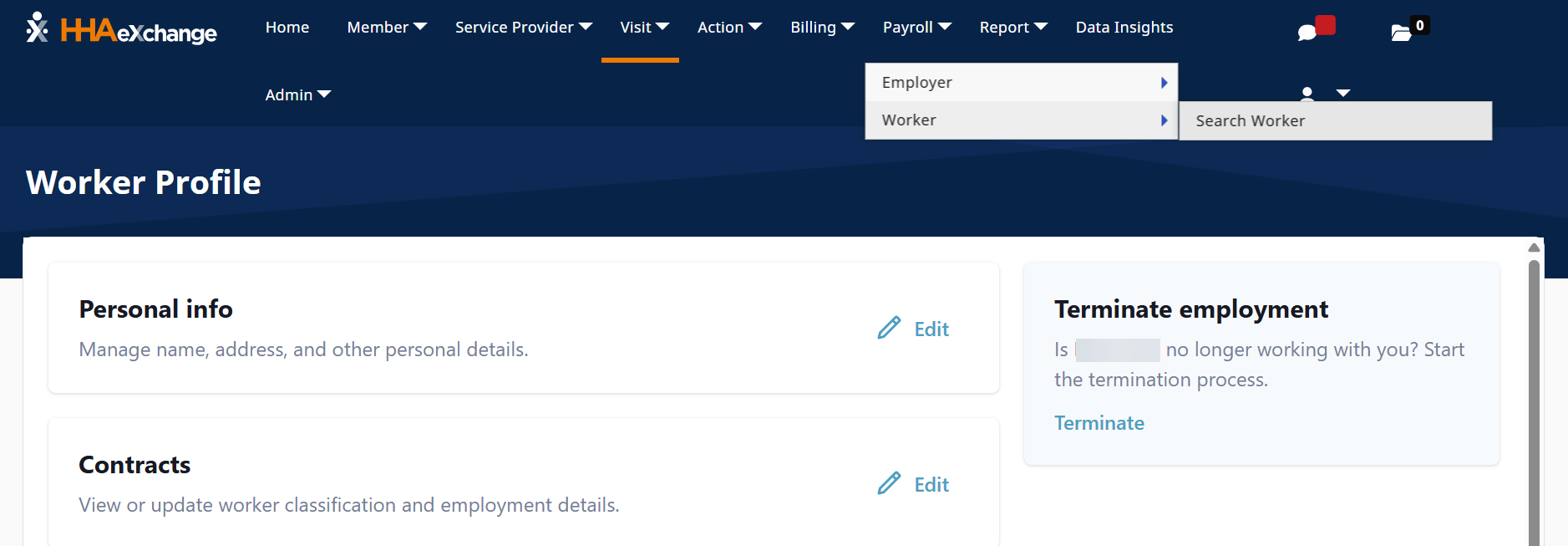
Go to Payroll > Worker > Search Worker and then select the worker.
-
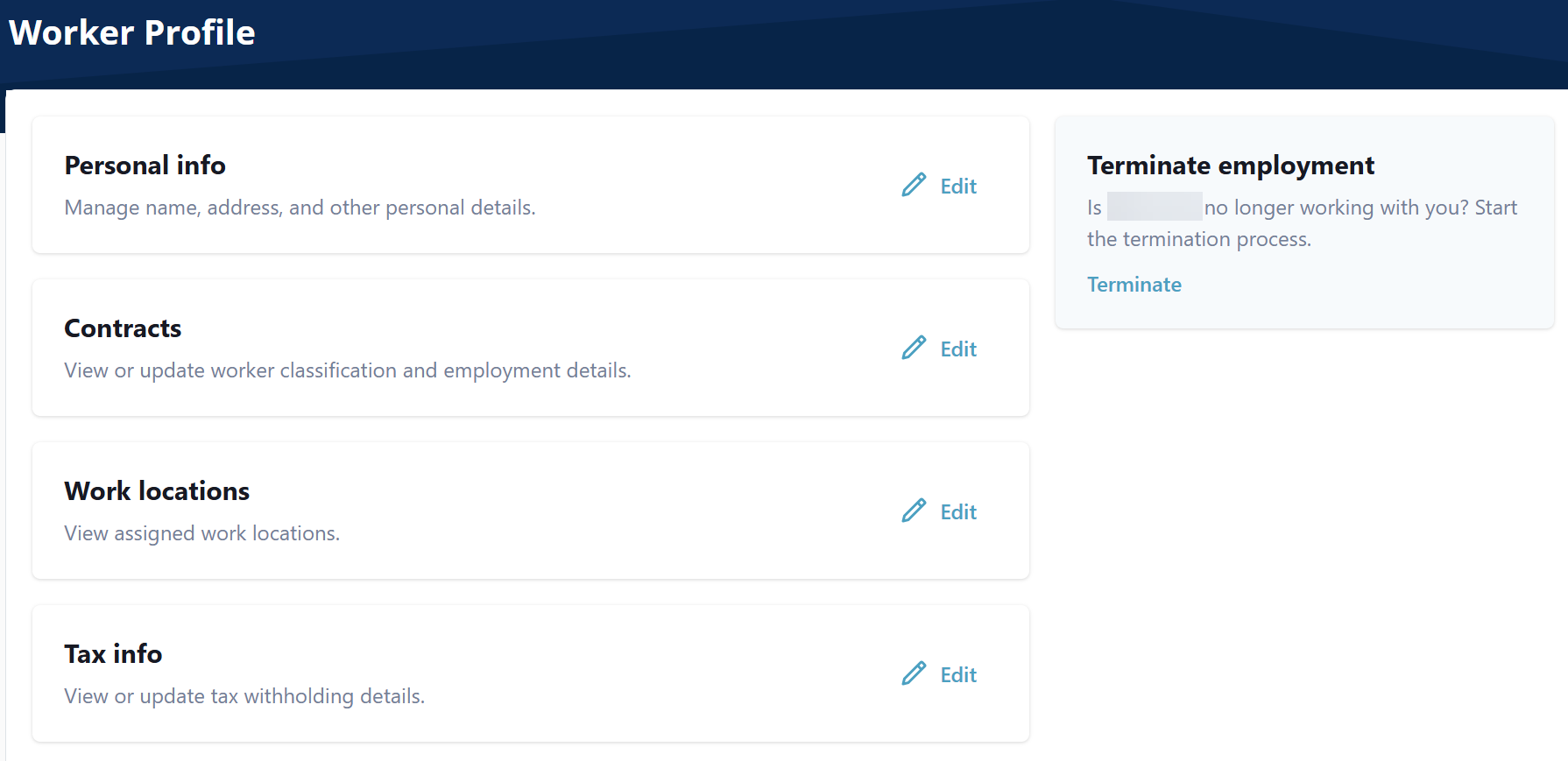
On the Worker Profile select Edit on the Tax info section. The Tax info window opens.
-
Scroll down to the state tax setup. Assuming reciprocity exists between the worker’s home and work state, you will see a reciprocity section and an option to mark whether an exemption certificate has been provided by the employee.
If the exemption certificate has been provided, select Yes.
-
This automatically exempts the worker from all work-state income taxes and removes the employee tax setup for the work-state.
-
Both the worker and the employer are still required to complete the home state tax setup information as needed.
-
-
Once all home state tax information has been provided for both the employee and the employer, the appropriate taxes will be withheld, filed, and paid accordingly.
If a worker lives and works in two different states that have a reciprocal agreement in place:
-
We will withhold state income tax for the home state only.
-
All other taxes will be withheld for the work state (ie; SUI).
If a worker lives and works in two different states that do not have a reciprocal agreement in place:
-
The worker may be subject to income taxes in both the home and work state